Here’s a moment you’ve probably had. You’re about to launch into a singing activity, the kind your class is going to love, and you glance over at the student who is non-speaking or minimally verbal. And you quietly ask yourself: what do I do with them right now?
It’s an honest question. And most music teachers who ask it are already doing more than they give themselves credit for. The ones who don’t ask have already answered it, usually in one of two ways:
- skip that student over and keep the activity moving, or
- pivot to movement because at least their body is doing something. Both paths make the same quiet decision before the student has a chance to show you anything: that their voice does not matter.
There is a third path. It takes some planning. In in my classroom experience, it changes everything.
What a choice board actually is (and isn’t)
Choice boards are a way to elicit student responses, plain and simple.
A choice board is a visual display of options. A student can point to one, tap one, select one on an AAC device, or communicate their choice through eye gaze. What makes it powerful in music class isn’t the board itself; it’s when you offer it.
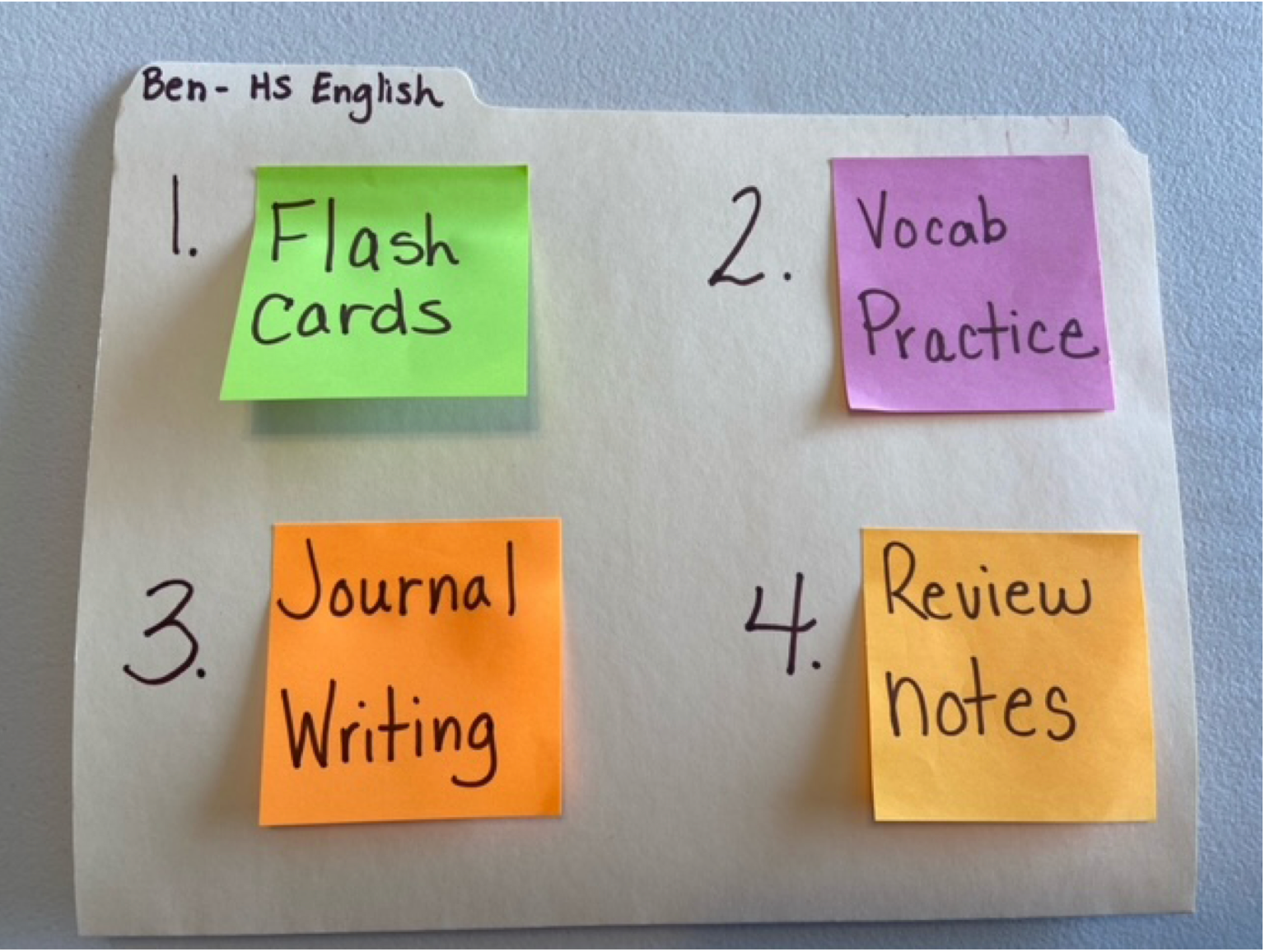
In music, a choice board means a student gets to make a real musical decision. Not a “do you want to sit or stand” decision. A musical one: which animal lives on Old MacDonald’s farm, what food is Aiken Drum’s head made of, what does the fox say? The board is a musical tool. It belongs in your room for the same reasons your pitched instruments do.
Songs that invite choice (and how to find them)
Some songs are built for this. Aiken Drum, Charlie Over the Ocean, Great Big House in New Orleans, Old Raggy, Pickles and Pie: they share a repeating structure with a fill-in-the-blank slot. A place in the music that is waiting for a decision.
Take Aiken Drum. Every verse describes a new piece of clothing made from food. What is his hat made of? What are his pants made of? The choices are tangible, silly, and memorable. A student who uses a choice board selects the food. You sing it. The class sings it back. That student just led the verse. They made a musical contribution that changed what the class sang. Not symbolically. Actually.
A few things to keep in mind: the choice board isn’t a ceiling. Verbal responses, AAC responses that go off-script, pointing at something in the room rather than the board: all of that counts. The board is a scaffold, not a constraint. And once you have the pattern in your head, you’ll find it everywhere. Call-and-response structures, repeated questions, verses with a variable: all of these have the same potential.
When selecting a choice song, it doesn’t need to be a song that has traditionally had breaks in it. I’ve mentioned Great Big House in New Orleans but it was not designed to have different pies. It just works.
Does it really help? Are we just moving the goalpost?
Research on AAC use and language development is clear that students who have consistent access to augmentative communication, including choice-based tools, show growth in both expressive and receptive language over time (White et al., 2021; Dada et al., 2020). The choice board is not moving the goalposts. It is building the cognitive and communicative field on which real participation grows.
There’s a useful scaffold sequence here, one that mirrors how language and music both develop. Start with fragments: stop at the end of a phrase and wait. Then move to echo songs, where the structure itself invites imitation. Then fuller call-and-response, where the student’s contribution shapes what comes next. You’re not lowering expectations at each step. You’re building the architecture for what eventually becomes full participation.
A note about paraprofessionals
If you have paraprofessionals supporting students in your music room, this is where you can invite them to be active participants in the student learning.
Before class, give your para a quick heads-up: here’s the song, here’s the choice board, here’s where the student’s turn will fall. That’s often enough. The para can help the student think about their answer while the class is singing, so that when the moment arrives, the student is ready. Not prompted, not spoken for, just ready.
That partnership is worth cultivating.
That framing matters, especially if you’ve ever felt like you need permission to invest this much energy into a strategy. Choice boards in music class are not just an accommodation. They are language development. They belong in your program.
So, what does it look like in MY classroom?
I front load my year with choice boards, both in my self-contained classes and my general education classes. If you start with the expectation that we all participate and all responses are welcomed, you will spend less time fighting for a response later.
When we are doing an activity with a choice board, I keep it projected the entire time the class is doing the activity. If there is a paraprofessional in the room, they have a printed copy and so do I.
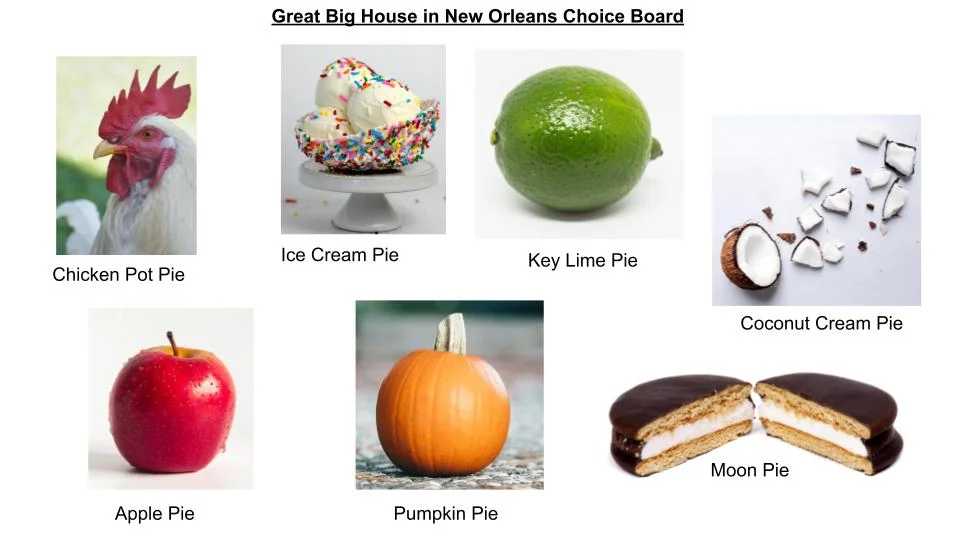
Any student - I mean it, any student - is welcomed to make a choice from the projected choice board. If they don’t want to or are unable to move to the board, they are presented with a printed copy. Most importantly, any answer is accepted. Its only music!
Where do I get the pictures?
Don’t overthink this part! In the past I have used Google images and UnSplashed. The important thing is that there are choices and the students know what they mean.
Sometimes you may need to get a little tricky. I once had a song choice for Offenbach’s Can Can. The traditional picture for this would be dancing ladies. I’m not dealing with the parent phone calls on that one! Instead, I used a picture of a toucan … because toucan = two-can = can can!
With the advent of AI image generation, this can be an easy source for images you can’t easily find - like my student who wanted a baby giraffe riding on a lion’s back. Google Gemini is free and easy to use for this purpose

What do you do?
Come back to the question you started with. You’re about to teach a singing activity, and you have a student in the room who doesn’t speak, or who speaks very little.
You give them a choice. You make space in the music for their decision to land. You wait. You do it again next week. You pay attention to what happens over time.
Extra points if you do it everyday, in every class.
That is not a workaround. That is teaching.
References
Dada, S., Flores, C., Bastable, K., & Schlosser, R.W. (2020). The effects of augmentative and alternative communication interventions on the receptive language skills of children with developmental disabilities: A scoping review. International Journal of Speech-Language Pathology, 23, 247 - 257.
White, E.N., Ayres, K.M., Snyder, S.K., Cagliani, R.R., & Ledford, J.R. (2021). Augmentative and alternative communication and speech production for individuals with ASD: A Systematic Review. Journal of Autism and Developmental Disorders, 51, 4199 - 4212.