When I started teaching students with disabilities, my entire formal preparation consisted of one undergraduate course where I learned initialisms (ASD, MoCi, etc) and the word “differentiation.” The rest I had to figure out in the room, with real students, through a lot of trial and a fair amount of error.
What I have landed on, after years of refining, comes down to two things: a predictable lesson structure and a visual schedule. They are strategies that work together, and once you see why, you won’t want to teach without them.
Why structure works (and why it isn’t just “for” special education)
Here’s the thing about predictability: every student benefits from it, but students with disabilities often depend on it.
A special education coordinator I work with once told me something that has stayed with me ever since: “It takes 15 perfect repetitions for our students to feel at ease with a procedure.” Fifteen. That number recalibrated how I thought about consistency. What feels like routine to us is genuinely regulating for many of our students. When a student knows what comes next, they can direct their energy toward the learning instead of toward managing uncertainty.
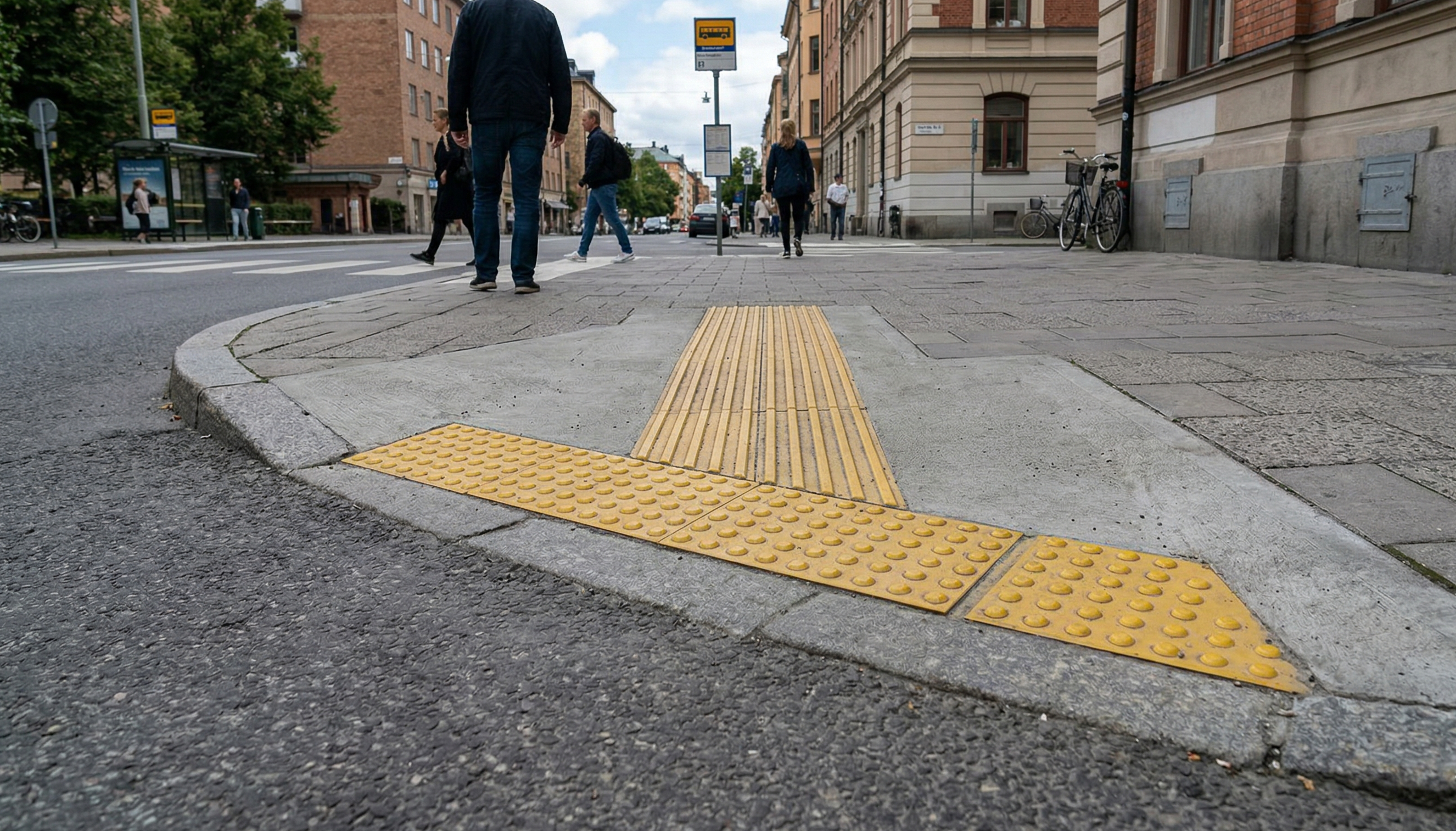
This might sound like a strategy built for one specific group. It is, and that’s precisely the point. There’s a name for this pattern: the Curb Cut Principle. The “curb cut” was designed for wheelchair users to make the transition from a road intersection to the sidewalk. This turned out to benefit cyclists, parents with strollers, and anyone making a delivery. A predictable lesson structure designed with students with disabilities in mind will benefit every student in your room. That’s Universal Design for Learning in action, and it’s a good reason to apply these strategies even if you don’t currently teach self-contained special education classes.
Building the structure
My classes meet for 60 minutes once a week (yes, this is too long). I have found that 8 to 10 activities fills that time well. More importantly, I have designed each one so it can be adapted for students who are nonverbal, students with motor differences, and students who are easily overstimulated. That flexibility isn’t an add-on. It is baked into the planning from the start.
Shameless self-promotion
I have a full year sequence of lesson plans available on Teachers Pay Teachers. It is what I use!Here is the sequence I use. Take what fits, leave what doesn’t. The structure matters more than any individual activity.
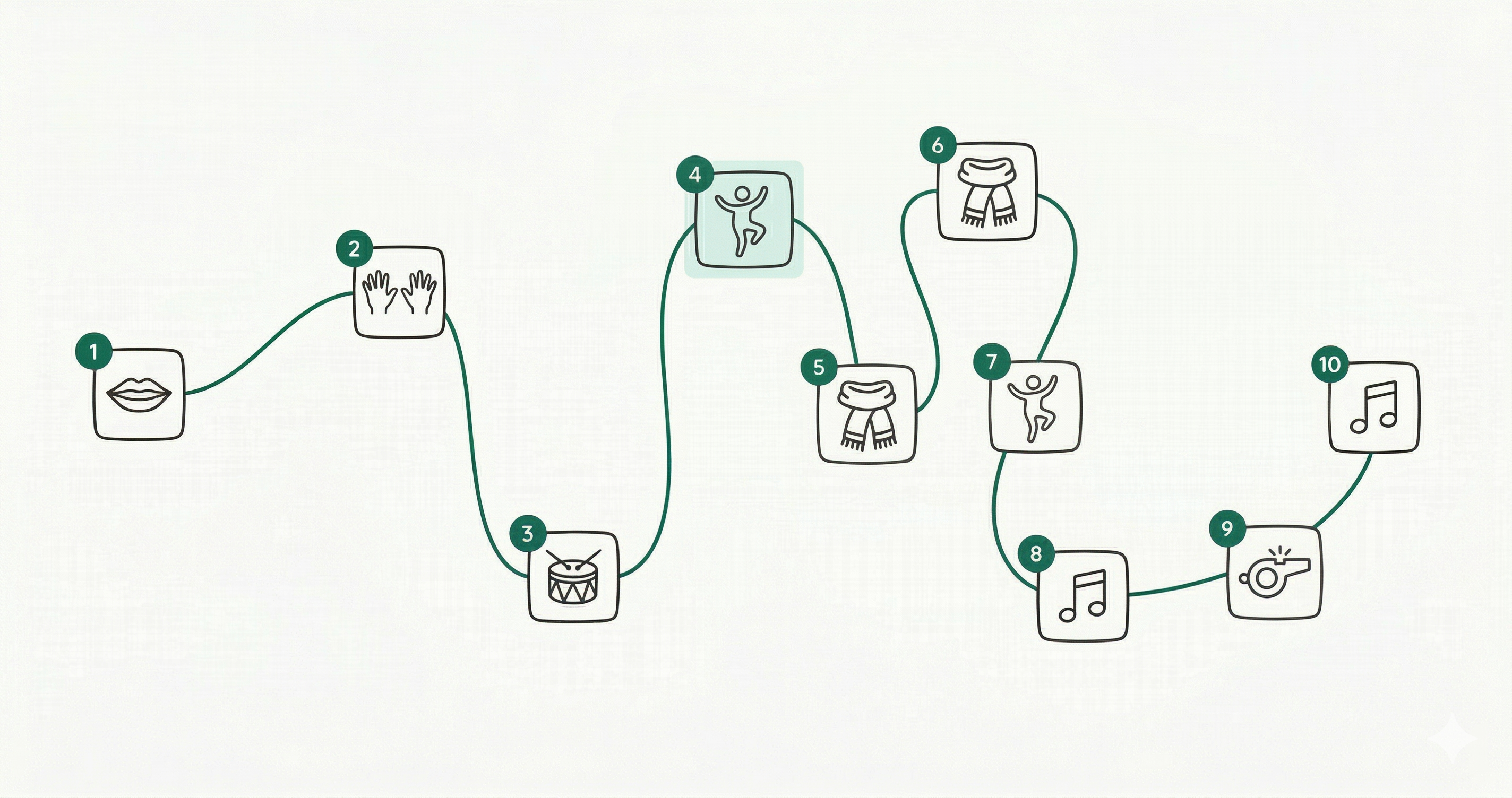
- Voice warm-up. Something predictable and low-stakes. I use LineRider.com, my poem voice warm-ups, Google Chrome Lab Spectrogram, and vocal sirens. The goal is to get voices moving.
- Echo song. Start with a song where students only have to echo one short phrase or point to something. “John the Rabbit” is a strong entry point because the expected response is simple and clear. As the process becomes more familiar, you can use harder recall and response songs like Did You Feed My Cow
- Pattern instruction. I toss a bean bag to each student and have them echo a rhythmic or tonal pattern from our current songs. When students show readiness, I flip it: they give me a pattern to echo. For classes that are ready, this is also where I introduce rhythm reading and writing.
- Beat keeping or movement activity. Whole-body engagement before we move toward finer motor work.
- Creative voice. A serve-and-return activity. I ask students to sing a song “like a ghost” or “like a baby” with no words. I listen for head voice, musical phrases, and natural patterns. It is low-pressure and generative.
- Free dance. Gross motor before fine motor. I like Koo Koo Kangaroo videos here because they repeat each movement long enough for students to catch on before the choreography changes.
- Beat keeping, second round. Focus shifts to flow, pulsation, and whole-body beat keeping. This is also where I introduce scarves and egg shakers when students are ready.
- Social drumming to a choice song. Students fill in a blank in a song (think Aiken Drum), then come up to drum with me. I watch for foot movement: if the feet are moving while drumming, alternating hand patterns won’t be accessible yet. When a student can’t match my tempo, I follow theirs.
- Beat keeping, third round. Fine motor focus, with recorded music. Narrative pieces work especially well here for sustaining attention. In the Hall of the Mountain King, Peter and the Wolf, The Fox Went Out on a Chilly Night.
- Something they love. Make them sad to leave and excited to come back. A favorite video, a picture book, a dance they ask for by name. This isn’t a throwaway ending. It’s the anchor of the transition out.
A few notes on repertoire: I pull songs from grade-level equivalents in my general education classes. When students move toward a less restrictive environment, I don’t want them to arrive already behind because their music experience was pitched below their peers. Keep the content age-appropriate and grade-adjacent.
I also change the songs roughly once a month. Each lesson, I add one small layer of student independence. The structure stays constant. The content grows.
My lesson structure isnt magic (and it honestly looks a lot like First Steps in Music). Music therapist and music teacher, Meagan Grammatico, starts with hello songs and incorporates sensory stations where I include dance. These are the activities that work for her and her students.
The visual schedule
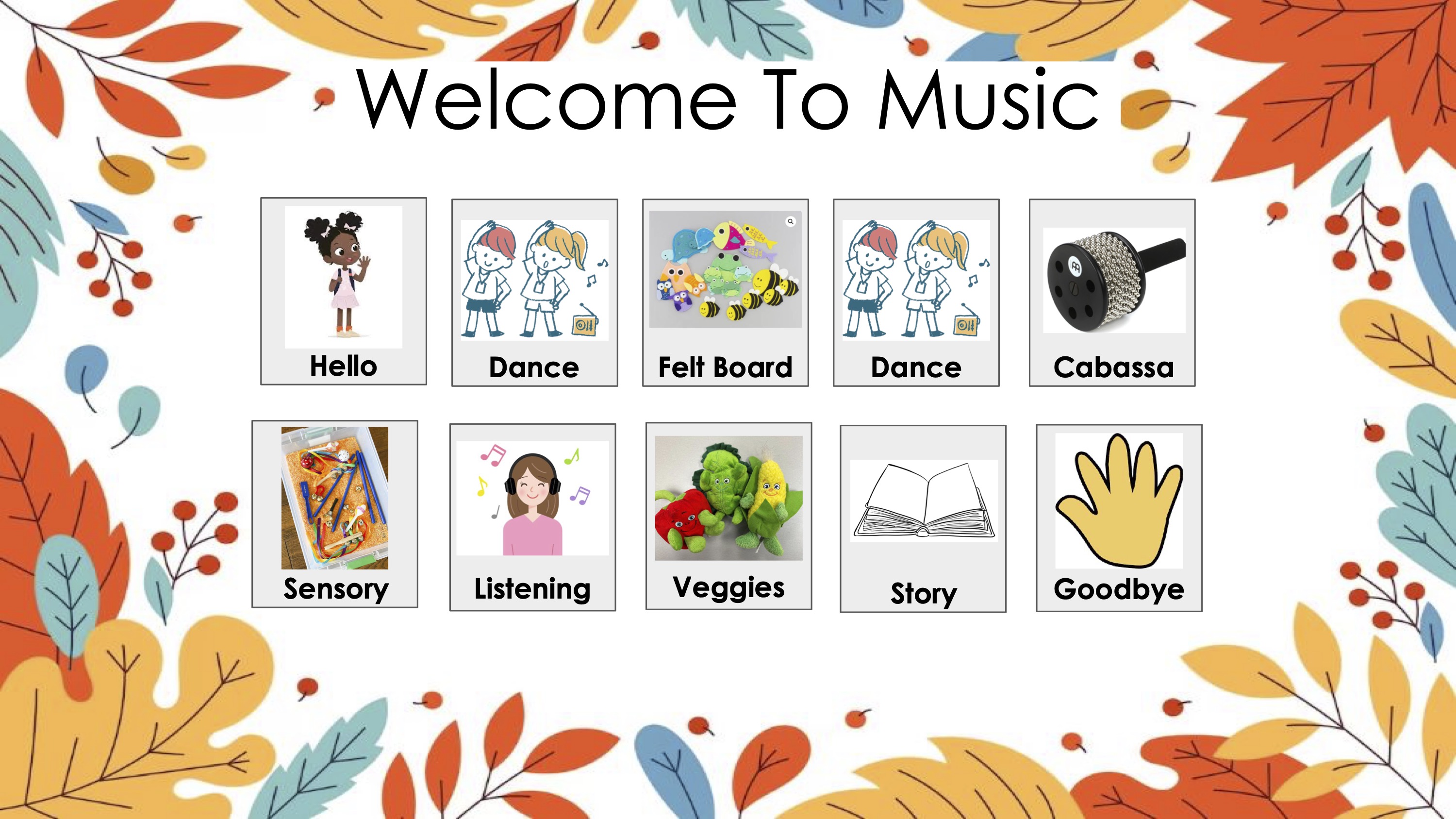
Whenever students are in the room, I have a visual schedule on the board. It shows every activity in order, with a picture for each one.
The pictures don’t need to be anything special. BoardMaker images, photos from Unsplash, pictures you took yourself in the room. What matters is that there is a picture, and that students learn to connect it to the song or activity. Over time, they will. Descriptive images also support students who are working on reading, which is a quiet UDL win that costs nothing extra.
Keep the schedule visually clean. High contrast is best: black on white, clear images, simple fonts. Avoid using color to convey meaning, and avoid decorative fonts. Some students have visual processing differences, and a cluttered schedule can add to the cognitive load rather than reduce it.
A printed copy can also serve as a “First __ , Then __” behavioral support for individual students who need that added layer of predictability.
My Lesson Plan Sequence on TPT uses Google Slides. A colleague of mine makes a physical poster. Either works. The only wrong approach is the one that doesn’t actually support your students.
A few more things that help
Meet the class at the door. Transitions are high-anxiety moments and your presence at the door makes a real difference.
Your classroom layout is a behavior management tool: Arrange chairs in a semi-circle. It supports turn-taking, keeps students in their areas, and reduces elopement. Put a strip of red tape on the floor at the border of any area you don’t want students to enter. SitSpots makes a long velcro tape that won’t damage your floor. Similar options are available on Amazon.
Read the IEPs and behavior plans. Just the summary pages of IEPs is fine. If you teach in the US, you are legally obligated to follow them. Read them
Talk with your paraprofessionals about what you need from them in your room. They are the experts in those students. You are the expert in teaching music. That is a powerful combination when both people understand their role.